
IACMR研究系列讲座第五十九期
主题: 应对心理学与管理学研究中的“精确性-广度-简洁性”不可能三角:一种全面探索路径
演讲嘉宾: Liqiang Huang,香港中文大学
主持人: 管延军,诺丁汉大学商学院(中国)
时间: 2026 年 3 月 25 日上午 9:00-10:30(北京时间)
语言: 英语
讲座平台: Zoom
注册链接: https://www.xcdsystem.com/iacmr/forms/index.cfm?ID=bXaNY5c
摘要
Both psychological and management research face a fundamental challenge—the Precision–Breadth–Simplicity (PBS) impossible trinity. Experimental and micro-level studies often yield precise and parsimonious findings, yet their insights are narrow in scope and limited in external validity. Conversely, broad and simple theoretical concepts tend to lose precision, while efforts to integrate both precision and breadth introduce complexity that exceeds human cognitive limits. This paradox constrains cumulative theory development across disciplines, from basic psychology to organizational behavior. To address this enduring challenge, I introduce a Comprehensive Exploration (CE) approach—a data-guided, discovery-driven framework for building integrative theories from large-scale empirical evidence. My recent work demonstrates the power of this approach across multiple domains, such as aesthetic preferences (Psychology of Aesthetics, Creativity, and the Arts, 2025), visual working memory (Nature Communications, 2025; Nature Human Behaviour, 2023), as well as theoretical syntheses addressing the PBS trilemma directly (Review of General Psychology, 2025). These projects showcase how comprehensive exploration can bridge micro-level experimental precision with broad theoretical generalization—an ambition equally relevant to management, decision science, and organizational research.
嘉宾简介
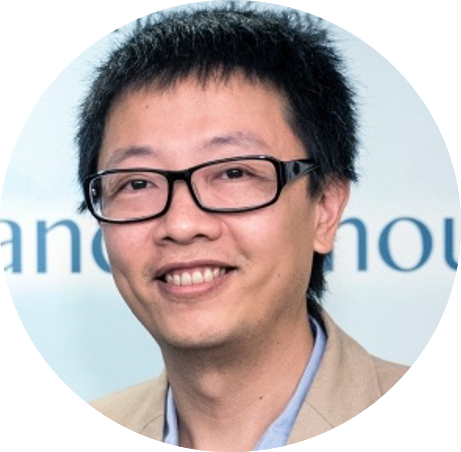
Professor Liqiang Huang works in the Department of Psychology at The Chinese University of Hong Kong (CUHK). Before joining CUHK, he completed his PhD at the University of California, San Diego, followed by a postdoctoral fellowship at Princeton University. His earlier research followed a traditional theory-driven approach, particularly in developing the Boolean Map Theory of visual attention into a precise and broad framework. After dedicating two decades to this work, he has since shifted his perspective, now believing that a better approach is conducting large-scale experiments followed by “comprehensive exploration” models.